
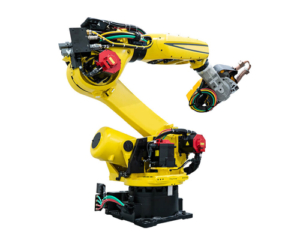
Robot Welding Services in Chennai
In modern manufacturing, even a small variation in a weld can affect the strength, appearance, and reliability of a finished component. Robotic welding brings greater control to repetitive welding operations by combining programmed movements, consistent torch positioning, and automated process control. For manufacturers handling metal fabrication, automotive components, and industrial assemblies, Robot Welding Services in Chennai can support more consistent production, reduce repetitive manual effort, and improve workflow efficiency. With the right equipment, fixtures, and welding parameters, businesses can achieve reliable weld quality while meeting demanding production requirements.
Precision in Every Weld
Accurate positioning and controlled movement are the key to consistent welding. The robotic systems are programmed to follow the appropriate paths, speeds, and welding sequences so as to maintain proper torch angles. This is especially beneficial if manufacturers are required to manufacture parts that are similar in repeated batches and maintain a consistent quality of joints.
- Programmed Path: Helps to maintain the correct position of the torch during the welding process.
- Repeatable Welds: Once the welding is accomplished on similar components, the welding sequence can be repeated for similar components.
- Controlled Parameters: Appropriate welding speed, current, and other parameters can be used to maintain consistency.
- Reduced Variations: Automation limits certain inconsistencies associated with repetitive manual operations.
- Reliable Production: Consistent processes will ensure that the manufacturer maintains the specified quality.
Faster Production with Automation
Manufacturers usually have to make a lot of parts in a short time span within a production schedule. Robotic welding can eliminate repetitive welding tasks and minimise the time spent in manual repositioning. With the robot, fixtures, and manufacturing workflow correctly set up, manufacturers can achieve higher throughput and a more predictable manufacturing schedule.
- Extended Production Runs: With proper surveillance and safety, automated welding can be employed for long production runs.
- Reduced repositioning: Appropriate fixtures ensure that the product remains in position during the welding process.
- Repeatable Cycle Times: Programmed movements provide more predictable production timing.
- Better Workflow: Robotic welding can be combined with other manufacturing processes to minimize needless handling.
- Improved Production Capacity: Automation can be used to deal with repetitive, high-volume welding jobs.
Welding Solutions for Different Applications
The welding processes, robot configurations, and process control need to vary with different components. The selection of a proper setup is dependent upon the material, the joint design, the size of the parts, and the quantity of parts to be produced. Robotic welding systems can be designed for various industrial processes to meet particular fabrication needs.
- Automotive Components: Brackets, frames, mounts, and some structural assemblies.
- Sheet Metal Fabrication: Assists with repetitive enclosures, panel, cabinet, and fabricated part welding.
- Industrial Equipment: Assists in the manufacturing of metal frames, machine structures, and assemblies.
- Pipe and Tube Components: Can set up acceptable tubular components and position them appropriately with fixtures.
- General Fabrication: Supports repetitious welding tasks for similar metal parts and weldments.
Consistent Quality with Less Rework
The quality of the weld can be affected by several factors such as material preparation, joint fit-up, welding parameters, and equipment condition. While robotic welding provides repeatability by following programmed welding movements, it still requires correct setup and inspection of the robotic system. A good welding process can help to minimise the need for corrective work and avoid unnecessary defects.
Stable Welding Paths
Programmed movement is used to keep welding track as intended.
Proper Fixture Alignment
The correct positioning of components facilitates regular joint preparation and weld placement.
Controlled Weld Parameters
The appropriate settings ensure the desired weld profile and penetration.
Quality Inspections
Defects are detected by visual checks or other suitable inspection techniques.
Reduced Rework
By reducing some of the same errors and material waste that occur regularly, a stable process can help.
Upgrade Your Welding Process With the Right Automation
For components to be manufactured with the necessary strength, uniformity, and finish, reliable welding is crucial. When the system is properly developed and maintained, robotic welding gives producers a way to standardise repetitive tasks, enhance production planning, and minimise some types of rework. Businesses can investigate automation solutions that fit their components, production quantities, and operational objectives by selecting Robot Welding Services in Chennai. Manufacturers may create a welding workflow that is more reliable, effective, and flexible with the correct technical evaluation and process configuration.